
Quakers in Business
Photo by gretta vosper on Unsplash

Photo by gretta vosper on Unsplash
Honesty That Built Businesses
Excluded from universities and public office, Quakers turned challenges into opportunity—creating businesses you still know today, from Cadbury chocolate to Barclays Bank. Guided by integrity, they not only built trusted companies but also pioneered fair work practices, healthy products, and thriving communities like Bournville. Discover how honesty and innovation shaped industries—and changed lives.
Quakers are famous for living by their principles—honesty, fairness, and integrity. In the 19th century, these values helped them leave a lasting mark on industry, business, and society.
Read more:
For much of British history, Quakers couldn’t hold public office or attend universities. Early Quakers (starting in the 17th century) were prevented from holding public office and attending university primarily because they were considered "Dissenters" (non-Anglicans) and refused to comply with the legal and religious requirements of the state-controlled Church of England.
Their strict adherence to testimonies regarding equality, integrity, and pacifism conflicted with the social, political, and educational norms of the time, leading to legal restrictions that lasted until the late 19th century.
But instead of holding them back, this inspired them to create new businesses and industries.
From banking to chocolate-making, they found ways to thrive—and change the world around them.
Many familiar brands have Quaker roots:
Banks: Barclays and Lloyds
Chocolate: Fry’s, Rowntree’s, Cadbury
Shoes: Clarks
Biscuits: Huntley & Palmers
Matches: Bryant & May
(But NOT Quaker Oats!)
You might like to read this article on historical and current Quaker business practices. Click here - wealthymatters.com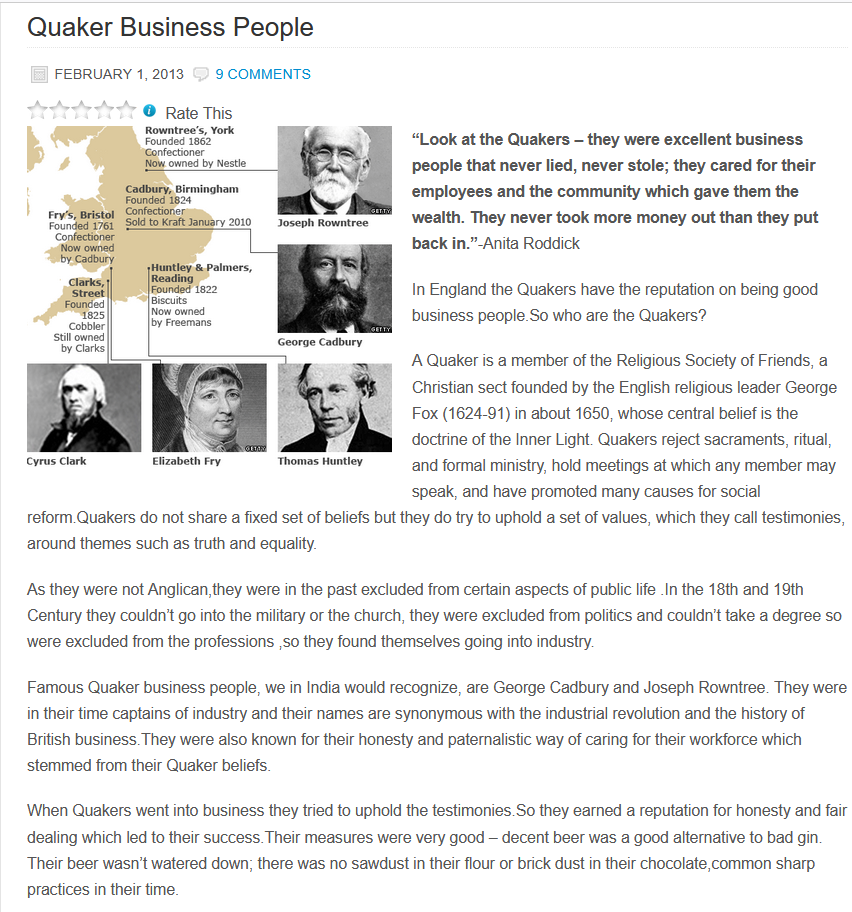
Quakers built their businesses on trust. Customers knew they would be treated fairly, employees could rely on honest management, and communities benefited from responsible practices. Quaker communities oversaw local Quaker businesses in order to maintain these standards and prevent over-indebtedness and bankruptcy. They regulated the master-servant and employer-employee relationships in the interest of equality and fairness.
Quaker businesses weren’t just about profit. They led the way in social innovation:
Bournville Village: George Cadbury created a model community for his workers with housing, schools, and parks.
Healthy alternatives: Chocolate drinks offered a safe and nutritious option in an era of contaminated water and widespread alcohol abuse.
Fair treatment: Quakers promoted equality and fairness between employers and employees long before labor laws existed.
The most powerful tool Quakers brought to business was simple: integrity. By applying the same honesty in commerce as in life, they earned trust and loyalty. Their example shows how doing the right thing can also build thriving, lasting enterprises.
Quakers’ impact on industry goes far beyond chocolate and banks. Their story is one of innovation, ethics, and social change that still influences businesses and communities today. Dive into the fascinating history of Quakers in industry, and discover how their values continue to inspire ethical business practices around the world.
Quaker Principles in Action:
Quakers & Ethical Investment — Quakers NZ
Understanding Quakers' Ethical Business Principles
Famous Quaker Companies:
Social Innovation & Workers’ Welfare:
Quaker history in business and values — Quakers and Business
Quakers and industry overview — Q & B
Quakers and Banking:
A brief history of Quakers and banking — Quakers in Britain
Learn more about how Quakers aim to live
Explore Quaker Beliefs
Read about how Quakers are putting their faith into practice today
Connect with a Quaker
Find a Quaker Meeting

The Quaker Tapestry project was stitched by men, women and children from 15 countries between 1981 and 1996. The series of tapestries tell the story of 400 years of Quaker history and influence throughout the world. Learn more here.
