Earth Friends: stories of caring for the planet
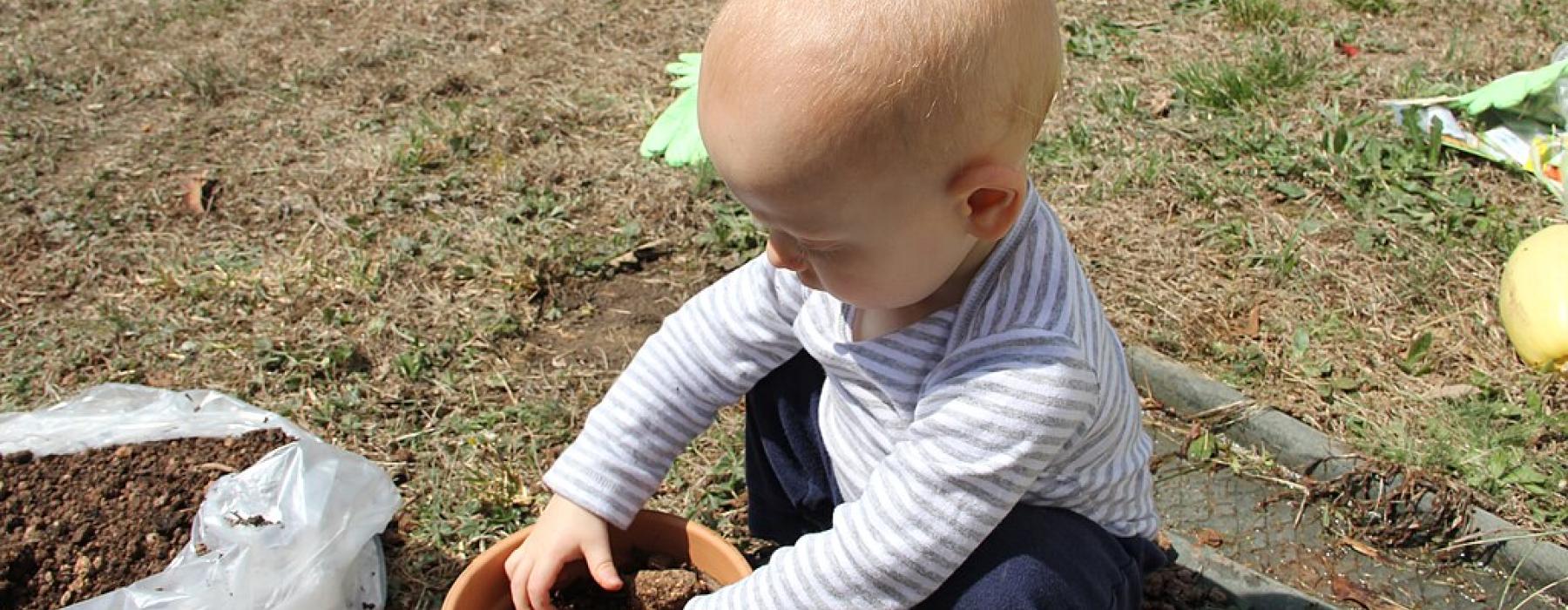
Photo by Jennifer Stratton mypubliclands, Public domain, via Wikimedia Commons

Photo by Jennifer Stratton mypubliclands, Public domain, via Wikimedia Commons
Quakers have a testimony to Simplicity — the belief that a life freed from excess makes room for what actually matters: relationships, community, spiritual depth, and care for the earth. And a testimony to Sustainability — an acknowledgement that the earth's riches are not ours to exploit, and that we are responsible for the world we leave to future generations.
But perhaps Rob and Heather List say it better than any formal statement can:
"The big thing the Lists would want you to know is that their life is not a grim self-sacrifice to a politically correct duty. It is interesting, mentally stimulating, building friendships, deeply satisfying and most definitely joyful."
The people on this page are Quakers from across Aotearoa who have found their own ways to live these values. Their approaches are as varied as their lives — a scientist, a nurse, a forester, a permaculture teacher, an engineer, a gardener, an activist — but the thread running through all of them is the same: a conviction that how we live on this earth matters, and that it is possible to live differently.
Learn more about the Quaker Testimonies →
Permaculture, simplicity, and a good way to live — across four continents
The Testimony of Sustainability calls Quakers to consider the long-term impact of their choices on ecosystems, communities and future generations. Few have taken that call further than Rosemary Morrow.
Rosemary grew up in Perth, her childhood playground the Australian bush and the Swan River. As an adult she studied agricultural science, horticulture, environmental studies — and then discovered permaculture, the discipline that, as she describes it, "linked it all together."
Permaculture is the conscious design of landscapes that mimic natural ecosystems — productive, diverse, and self-sustaining. Where modern agriculture destroys diversity and degrades land over time, permaculture works with natural processes rather than against them. Rosemary found in it something she had not encountered in any of her formal studies: ethics.
She also found that it corresponded closely to Quakerism, which she had come to in 1978. The parallels were striking: care for people, simplicity, community, ethical use of money, right livelihood. Both, she says, "render infinite positive outcomes when practised."
Over the following decades Rosemary carried permaculture to places where it was urgently needed — Lesotho, Vietnam, Cambodia, East Timor, Malawi, Uganda, Ethiopia — teaching in post-conflict situations, in communities facing hunger and poverty, wherever the land was abused and the demand was for practical knowledge. She taught at the Quaker Settlement in Whanganui. She continued to follow the work wherever it might lead.
Her motivation was not optimism exactly. She carried, in her own words, "a vast and terrible grief for the destruction of this beautiful opportunity we had to make paradise here." But grief does not mean paralysis. Rosemary saw what she taught as risk management for an uncertain future — and also simply as a good way to live.
Each of these Quakers from across Aotearoa has found their own expression of care for the planet. Click any name to read their full story.
Albie Burgers — Solar energy, micro-hydro, carpooling, and kakapo on Codfish Island
Albie has always had a passion for the environment. As a student, he kept snakes in his bedroom; as a teacher he took groups of schoolboys into the African bush. In retirement in Golden Bay, he has pursued an extraordinary range of projects: installing a pelton wheel micro-hydro system, building a large solar hot-water collector, helping other households do the same, setting up a carpooling website for a remote community, running alternative energy workshops, maintaining a stoat and rat trap line, and spending fortnightly stints helping with winter kakapo feeding on Codfish Island.
Albie and his partner Felicity have also, for thirty years, set aside thirty hectares of their property to regenerate back to native bush. When asked why they plant oak trees they will never see milled, they explain that they are planting for the future — and for the present joy of watching trees grow.
In Albie's words: "I know that one or two people can't personally make much of a difference to the damage we as a species are doing to the planet. However, I also know that that's not a reason to do nothing."
David and Anne Wicks — An energy-efficient home built on inspiration and intention
Quaker Simplicity asks: what do we actually need? David and Anne built their answer.
When David and Anne designed their home in 2002, they were inspired by another Quaker couple's house they had visited in Waikanae. Working within a tight budget, they made careful choices: north-facing living areas with tiled floors to absorb winter sun, polyester insulation rather than synthetic materials, solar hot water, rainwater barrels, and eventually a heat pump that brought their annual power bill well under $1000 — including cooking. Their home has been a practical lesson in what thoughtful design can achieve.
Donald Mead — Sustainable forestry science and the long view
The Quaker testimony to Sustainability calls us to consider future generations. As a scientist, Don has spent his career doing exactly that.
Don joined the NZ Forest Service after high school, went on to study forestry in Edinburgh and gain a PhD in forest soils in Florida, and spent his career as a researcher and teacher at Canterbury and Lincoln Universities. His work has focused on sustainable forest management, agroforestry, and forest bioenergy — how to integrate trees into farming systems, protect waterways, increase biodiversity, and store carbon. He has been a consistent voice for long-term thinking in land management, arguing that economic tools alone are not sufficient — that we must account for energy, ecology, and time.
Don sees the Quaker call to live simply as an important part of the answer to where the world is headed: "He believes it is essential that everyone keeps long-term sustainability at the forefront of what they do, so that life is as good and exciting for our grandchildren's grandchildren."
Gael Howell — Community living, energy efficiency, and an inner-city Auckland home
Simplicity, for Quakers, is not just about having less — it is about choosing connection over isolation. Gael has lived that conviction across many decades.
Gael chose Quakerism after attending a Quaker school in Hobart. Trained as a nurse and later in education and counselling, she spent years working in welfare, the Family Court, and with migrant communities. Running through all of it was a conviction that isolated nuclear family life was not the only way — she and her husband Robert spent eight years in communal living arrangements, sharing childcare, space, and resources with another family.
When they moved to inner-city Auckland, they worked with heritage architects to transform a cold, inefficient early 1900s villa into a comfortable, low-energy home: double glazing, floor insulation, solar hot water, a heat pump, and provision for future photovoltaic generation. Every material choice was made with sustainability in mind — no MDF, no polyurethane finishes, no halogen downlights, no non-renewable gas. The house was designed to be ecologically sound for whoever lives there in the future.
The Testimony of Sustainability asks Quakers to understand our interdependence with all life. Helen has spent her career trying to make that understanding practical and political.
Helen studied Botany at Auckland University, went to the United States on a Fulbright scholarship just as Conservation was emerging as a formal discipline, and returned to spend her career in New Zealand's public service — with the Freshwater Section of DSIR, the Commission for the Environment, and finally as Parliamentary Commissioner for the Environment. In that role she led investigations that revealed New Zealand's own unsustainable land practices, including the incipient desertification of Central Otago from overgrazing.
Her conclusion from a career at the intersection of science and policy: "We can learn to live sustainably on the planet within the natural limits of our environment and resources, and we need to start now."
Rob and Heather List — One bag of rubbish a year, a bird hospital, and a house you have to learn to drive
The Quaker testimony to Simplicity is not a burden. Rob and Heather have made that their message.
Rob and Heather came to Quakers in the 1960s, already shaped by childhoods outdoors — tramping, fishing, hunting, the Tararua Tramping Club. They were active in the Save Manapouri campaign before environmental activism had a vocabulary. Their house is clad in green Colorsteel, insulated with recycled wool, lined with plantation timber; the tiled floor absorbs winter sun while the verandah blocks summer heat; solar panels generate over ninety percent of their electricity. In the garage: a Honda Jazz, three bikes, and a tandem that gets considerably more use. Beside the woodshed: a bird hospital, where they nurse injured native birds for DOC, including kahu, tui, kererū, kingfisher, ruru, and the occasional albatross.
In 2010 they set themselves the goal of producing one bag of landfill rubbish in a year. The story was picked up by the media. They got there. Rob's reflection: "Think about what you buy, especially how much packaging is involved, and be conscientious about composting and recycling. Really, it's not that hard to do."
Isobel Thompson — Forest and Bird, wetland conservation, and activism over a long life
Quakers believe that faith calls us to action in the world. Isobel lived that belief across eight decades.
Isobel's early years were spent in Public Works camps, then in Wairoa near Lake Waikaremoana, with great freedom of movement outdoors. Two years at Whanganui Friends School shaped her further. After nursing training and three years working in post-war China with Corso — travelling by mule cart through civil war areas — she returned to New Zealand and devoted much of her life to the Royal Forest and Bird Protection Society.
Her conservation work included writing submissions, organising camps and lectures, saving a wetland in her own neighbourhood from being drained for tennis courts, and helping to secure land grants for Forest and Bird on Waiheke and at Piha. She was instrumental in preserving the Miranda shoreline, of worldwide significance for migratory wading birds. She was appointed to the Coromandel State Forest Advisory Committee, learning in detail about the impacts of mining on land and water. She addressed many audiences over many years, outspoken and articulate, always finding the right person to progress a concern. "If any of these organisations thought they were getting an 'older woman' who would be very quiet," her story notes, "they were soon disabused."
Jack Woodward — Micro-hydro in Papua New Guinea, and the difference that light makes
The Quaker testimony to Community extends beyond our own borders. Jack's story is a reminder of what one person with relevant skills and a long-term commitment can achieve.
During the 1970s, Jack and Mary Woodward were at the University of Technology in Lae, Papua New Guinea, where Jack headed the Department of Electrical Engineering. There they met Johannicus Yang, and joined him in developing a micro-hydro scheme in 1975. The dream of bringing electricity to Yang's home village of Faseu stayed with Jack for decades. In 2005, after years of planning, fundraising, and five visits to PNG, the scheme was commissioned — an intake weir, a 220-metre pipeline, an 8kW turbine and generator, and underground cables bringing light to the elementary school, meeting house, church, and outdoor lanterns of a remote mountain community.
The project involved chartered cargo flights, hair-raising road journeys, a cyclone-caused landslide, and communication by postbox visited once a term. It was funded by an international group of donors, NZAid, the NZ Society of Friends, and the local community itself — who contributed materials, skilled and unskilled labour, and planning. Their self-confidence, Jack observed, was boosted as much as their lighting.
John and Muriel Morrison — Compost, conscience, and care for the earth
Simplicity for Quakers is not a modern trend. For John and Muriel, it was simply how life was lived.
John and Muriel Morrison were both teachers and principals at Friends School in Whanganui, deeply committed to the Peace Testimony — John was a conscientious objector in World War Two. They led non-violence workshops, marched against the Springbok tour, worked with children for many years, and kept their home open to anyone who needed it.
They also composted everything. Every scrap of garden greenery went back to the soil. The vegetable garden was spray-free. Dandelion roots were harvested, roasted and ground for coffee. Everything was recycled and reused — not as a political statement but as a natural extension of their Quaker belief in Simplicity and their regard for the earth. Their friend Rosemary Tredgold, writing about Muriel, remembers being called an "arsonist" for trying to burn a pile of garden branches. Muriel's view was that all greenery should return to the soil as compost, not as ash — a view she held, Rosemary notes, "well before it became politically correct to do so."
Joseph Short — From Kew Gardens to Wellington, a life given to plants
"Everything fitted together and was seen as a part of the integrated wholeness of life." Joe's approach to horticulture was also his approach to faith.
Joe Short was born on a Taranaki dairy farm in 1916, apprenticed to a New Plymouth nursery, sent on student exchange to Kew Gardens and then to the State Botanical Gardens of Berlin — where a language teacher introduced him to Quakers when he revealed his pacifism. He joined the Quaker centre in Berlin, which was supporting German Quakers and helping Jewish people to flee.
Joe went on to work at Rabindranath Tagore's ashram in West Bengal and at an agricultural institute in Allahabad, sharing his horticultural knowledge across India. He eventually settled in Wellington, where he was appointed to the Botany Department of Victoria University, and where he was responsible for many of the city's gardens including the Rose Garden, of which he became President. He also initiated the Peace Garden at the Quaker Settlement in Whanganui. He is remembered with great affection for the excursions he led into the bush during Summer Gatherings — a scientist who could pass on his own excitement for the natural world.
Katherine Knight — Recycling before it had a name
Quaker Simplicity is sometimes inherited. Kath received it from her gardening family, and gave it to four children and many grandchildren.
Kath (1913–2001) grew up in a family that grew its own food on a Mt Albert section, studied Botany at Auckland University, and became a fabulous gardener who could give the Latin name of virtually any plant in garden or bush. She was a founding member of Forest and Bird in Auckland. She was Secretary of the NZ Christian Pacifist Society and the Women's International League for Peace and Freedom. She was one of the founders of the NZ Foundation for Peace Studies.
She was also a recycler of extraordinary dedication — carrying grey water to the garden, collecting roof water in a tank, writing on both sides of paper, refusing paper towels, running off precisely one litre of hot water each night to wash her face rather than waste three litres waiting for the heat to travel from the cylinder. Her son Paul eventually issued a formal — and clearly affectionate — proclamation declaring her to have "already sufficiently recycled" and commanding her, by divine order, to stop. She and he chuckled over it many times.
Her daughter Ana: "She cared deeply about people and her community. Her care for the earth arose naturally from her philosophy of life, which was that all of life deserved love and respect."
Nick and Anita Bagnall — An organic garden built from scratch in Tauranga
The Testimony of Sustainability is practical. Nick's garden is a demonstration of what is possible on an ordinary section.
Nick Bagnall joined the UK Ecology Party (now the Green Party UK) in 1978 — the same year he put a solar panel on his roof. When he and Anita moved to Tauranga from the UK in 2008, they built a solar-heated, double-glazed, fully insulated house on a hillside section, then set about creating one of the most productive organic gardens in the area from a plot that was nothing but kikuyu grass and pine-clearing debris when they arrived.
Over two years, largely by hand, they built retaining walls, laid paths, planted five grape vines, three apple trees, citrus of many kinds, figs, almonds, feijoas, olives, macadamia, mulberry, avocado, seven soft fruits, two passionfruit, multiple vegetable patches, a herb garden, and native plantings for the birds and bees. Nick described compost as the heart of the garden. The kikuyu that had been the enemy became, after careful clearing and composting, the source of the soil fertility that made everything else possible.
Peter Creevey — Rescuing trees, living simply, and reforesting Aotearoa
Simplicity, for Peter, is not a sacrifice. It is what makes everything else possible.
Peter Creevey spent decades living in a Toyota campervan and on house-sits, rescuing native seedlings from places where they cannot thrive, potting them, and finding better homes for them — in reforestation projects, on private land, at the Quaker Settlement in Whanganui. He had been involved in the Summit Road Trust and the Quail Island Trust, helping to reforest thirty-one hectares of an island in Lyttelton Harbour that once held Parihaka rangatira Te Whiti as a captive, served as a leper colony, and housed the husky teams of Antarctic expeditions. Now it is returning to native forest.
Peter had been reading the scientific warnings about humanity's impact on the planet since his teens — Schumacher, Lovelock, the Club of Rome. For him "living simply" was more than a Quaker statement of faith: reducing the drain on resources, cutting consumerism, and — in his experience — improving both physical and mental health. He traveled by Gold Card on buses, ferries and trains, gardened wherever he found himself, and planted trees that will outlive him by centuries.
Philip and Phoebe Macdiarmid — Thirty years on the land, and a community garden in town
The simplest summary of Philip and Phoebe's story is their own: "We preferred it."
Thirty years ago Philip and Phoebe gave up their urban life for thirteen acres in the country — part grass, part bush, with a river on one boundary and a waterfall on another. They built solar hot water, generated electricity from solar panels, grew their own vegetables, never got a fridge (finding they didn't miss it much), and carried bags of washing to the laundromat in town on the day it opened, which Phoebe recalls as one of the best days of her life.
When age eventually brought them back to town, another daughter took over the old place — still off-grid. Philip and Phoebe still have solar hot water, and on Thursday mornings they walk to the community garden down the road, put in a few hours of work, and come home with vegetables. The heavy work is done by younger limbs; they do the watering and supply the morning tea.
Their motivation? "It wasn't a matter of principle really, though the testimony to simplicity has always appealed to us. Perhaps we choose our principles to fit our tastes."
Rachel Jackson — Fifteen acres of ex-forestry land, and a gift to the future
The Quaker testimony to Sustainability asks us to think beyond our own lifetimes. Rachel is planting trees that will be standing for centuries.
Rachel Jackson — Fifteen acres of ex-forestry land, and a gift to the future
The Quaker testimony to Sustainability asks us to think beyond our own lifetimes. Rachel is planting trees that will be standing for centuries.
Rachel is a city girl, raised in Auckland's Three Kings in a Quaker family with roots going back to George Fox. After a long teaching career and years of travel, she and her partner Brian took on fifteen acres of cleared ex-forestry land near Muriwai — described in its listing as "rough as guts, not for the fainthearted" — and began to transform it.
Inspired by the Eastwoodhill Arboretum near Gisborne, they planted hundreds of trees, chosen for colour, form, and ecological purpose: oaks grown from acorns, tulip trees, silk trees, tupelo, paulownia, kauri seedlings, a grove of long-lived redwoods. Poplars along the stream are now sprouting into hedges. Dozens of flax stud the wetlands. The valley is, in Rachel's words, "a birds' supermarket."
Rachel acknowledges that because some of her forebears cleared land for farming in this country, she feels it a privilege to be able to give something back in return for the forests previously destroyed. It is, her story concludes, "a gift that will grow in beauty and significance for a very long time."
These are ordinary people — teachers, scientists, nurses, engineers, gardeners — who have found in Quaker community a framework for living that is, in their own words, interesting, stimulating, friendship-building, and joyful.
If their approach to life speaks to you, you might find more common ground with Quakers than you expect. There are Quaker meetings in communities across Aotearoa, from Northland to Invercargill. You are welcome to come, ask questions, or simply sit quietly with us.
Find a Quaker Meeting near you → Learn about Quaker beliefs →