Honouring Te Tiriti o Waitangi
Quakers in Aotearoa New Zealand believe every person has equal worth. That conviction isn't just spiritual — it has political consequences. It means we cannot stand aside when the rights of tangata whenua are diminished.
We recognise Te Tiriti o Waitangi as a living document fundamental to the life of this nation. We acknowledge the iwi and hapū rangatiratanga — the sovereignty and self-determination — that Te Tiriti guarantees. And we advocate for constitutional change to properly reflect the equality of relationship this requires.
This is our faith in action.
Why Quakers are involved
Quakers focus more on how we live than on what we believe. We try to live by shared values — peace, integrity, equality, simplicity, community, and care for the earth. Our Advices & Queries puts it plainly: "Let your life speak."
Support for tino rangatiratanga flows directly from these values. Indigenous peoples' rights are human rights, and human rights matter to Quakers. This is also, for Quakers in Aotearoa, a matter of where we live. We are tangata Tiriti — people of the Treaty — and that carries responsibility.
The connection runs deep in our history here. Parihaka — the Taranaki community of peaceful resistance whose people were invaded by Crown forces in 1881 — stands as one of the most powerful examples of non-violent witness in this country's history. It resonates with Quaker values in ways that still shape how we understand our responsibilities today. You can read more about Quakers and Parihaka here.
What we are doing right now
Quaker engagement with Te Tiriti isn't historical — it is active and ongoing.
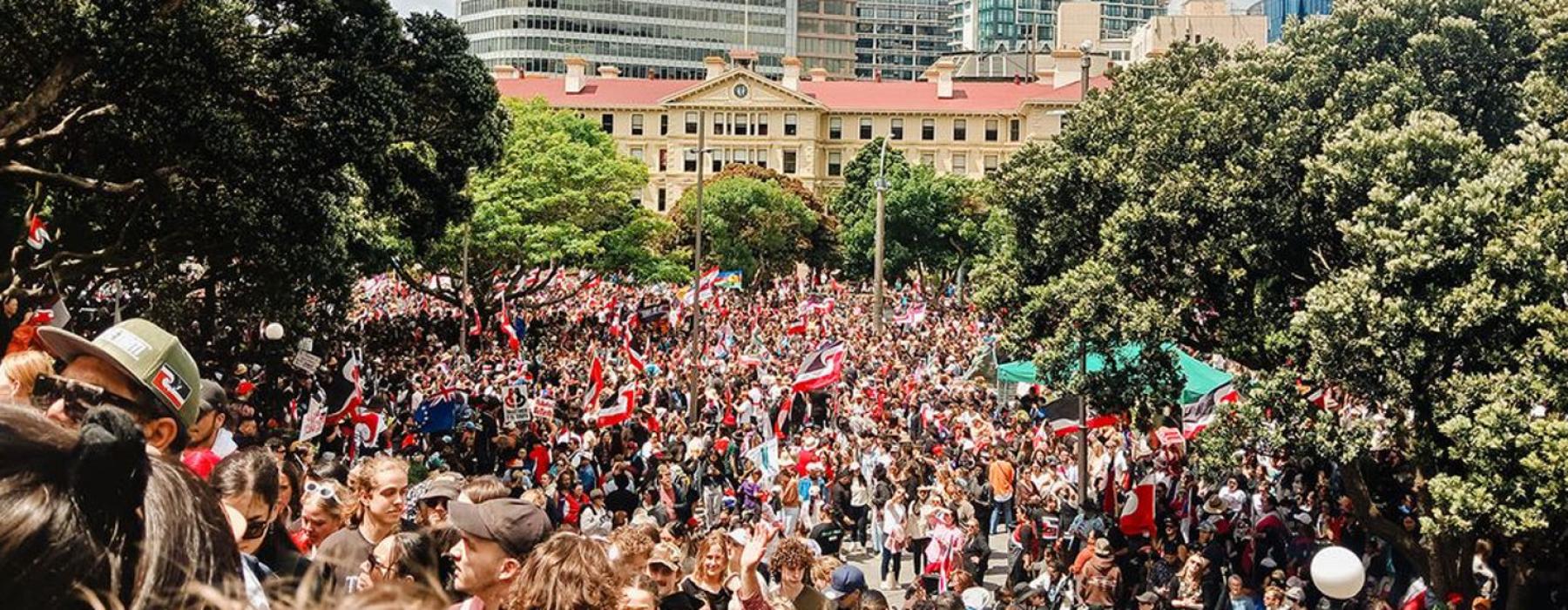
In 2025, the Religious Society of Friends (Quakers) Te Hāhi Tūhauwiri made a corporate submission to the Select Committee considering the Principles of the Treaty of Waitangi Bill, as did many individual Quakers. We opposed the Bill in its entirety. Its introduction, without negotiation, proposed to unilaterally diminish rights negotiated in good faith by Māori and the Crown in Te Tiriti o Waitangi 1840. The process demonstrably lacked integrity.
Our Treaty Relationships Group has worked on behalf of Quakers across Aotearoa — lobbying, networking, and educating communities on Te Tiriti. This has included presenting submissions to government and local councils, running sessions at our annual Summer Gathering, and hosting an annual weekend workshop at the Quaker Settlement in Whanganui.
Read our submissions to Parliament →
What do we mean by constitutional change?
Aotearoa New Zealand currently has no written constitution and no legal document that fully protects human rights or gives effect to Te Tiriti. Quakers believe this needs to change.
Constitutional change, in this context, means building new arrangements — potentially including a written constitution — that genuinely recognise the partnership between tangata whenua and the Crown that Te Tiriti intended. This would give Māori the ability to freely determine their political status and pursue their economic, social and cultural development, as guaranteed in Te Tiriti. It would also offer stronger protections for all New Zealanders' rights, which current arrangements fail to provide.
The independent Matike Mai Aotearoa working group, whose report is among our resources, has developed detailed proposals for what such arrangements might look like — based on tikanga Māori and genuine partnership rather than simply adding Māori elements to existing Pākehā structures.
Explore constitutional change resources →
A long commitment
Quakers have been working on Treaty relationships since at least 1988, when the Yearly Meeting — our national gathering — adopted its first statement on bicultural issues. A 1995 statement on Māori-Pākehā issues followed, and the community has continued to develop and deepen its understanding ever since.
In 2014, the Quaker Lecture — "Standing in This Place" — was presented by David James, Jillian Wychel, Murray Short, and Linda Wilson at Yearly Meeting and at gatherings around Aotearoa. These four Pākehā Quakers examined their own roles as supporters of justice for indigenous peoples: how those roles had changed over time, and how they might continue to evolve. It remains a thoughtful and honest reflection on what it means to be an ally rather than merely a supporter.
Read the full text of "Standing in This Place" (PDF) →
Explore our full history of Treaty work and resources →
Want to take action?
Whether or not you are a Quaker, there are ways to engage with this work.
You can read our submission to the Select Committee on the Treaty Principles Bill, add your voice to the broader public conversation, or connect with Peace Movement Aotearoa, with whom Quakers have worked closely on Treaty education and advocacy for many years.
If you'd like to know more about how Quakers approach this work — or get involved locally — Quakers meet in communities across Aotearoa, from Northland to Invercargill. You are welcome.
Find a Quaker Meeting near you → Peace Movement Aotearoa →
New here? You are welcome.
If you arrived at this page because you care about Te Tiriti — whether or not you know anything about Quakers — you may find there is more common ground than you expect.
Quakers are a spiritual community that holds many different views about faith and belief. We do not require agreement on doctrine. We are joined by shared practice and shared values — and for Quakers in Aotearoa, honouring Te Tiriti is part of both.
The best way to understand Quakerism is to experience it. You are welcome to come to a meeting, ask questions, or simply sit with us in the quiet.
Learn more about Quaker beliefs → Find a Quaker Meeting near you →
← Back to Faith in Action
A short glossary: Pākehā — New Zealanders of European descent. Tino rangatiratanga — Māori sovereignty and self-determination. Tangata whenua — people of the land; Māori as the indigenous people of Aotearoa. Tangata Tiriti — people who came to Aotearoa under the Treaty; broadly, non-Māori New Zealanders. Hapū / iwi — subtribal and tribal groupings. Tikanga Māori — Māori customary practices and values. Te Hāhi Tūhauwiri — the Māori name for the Religious Society of Friends (Quakers) in Aotearoa New Zealand. Yearly Meeting — the annual national gathering of Quakers in Aotearoa.