
Quaker History in Aotearoa New Zealand
A quiet faith with a long local story
Quakers (also known as the Religious Society of Friends) have been part of life in Aotearoa New Zealand for more than 180 years. From early settlers seeking to live out their faith, to present-day communities working for peace and justice, Quakers have contributed quietly but steadily to the country’s social and spiritual life.
This page offers a short introduction to that story — who Quakers are, how they came to Aotearoa, and why their history still matters today.
Who are Quakers?
Quakers are a faith community that began in England in the 1600s. They are known for:
Silent worship
Equality between women and men
Commitment to peace
Respect for every person
Acting on faith through practical service
Quakers believe that there is “that of God” in everyone. This belief shapes how Friends worship, make decisions, and live in the world.
“Let your lives speak.” — a well-known Quaker saying
Early Quakers in Aotearoa (1840s–1870s)
The first Quakers arrived in Aotearoa New Zealand in the early 1840s, mainly from Britain. Many were drawn by the chance to build new lives, but they also brought with them strong values around fairness, peace, and community.
Images of Samuel Strong (1795 -1875) & Isaac Hill (1816 - 1885), Nelson Quakers
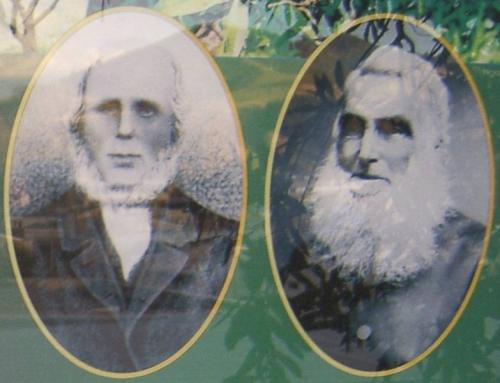
1842: The first recorded weekly Quaker Meeting for Worship was held in Whakatu Nelson.
1853: The first Quaker Meeting House in New Zealand was established in Whakatu Nelson.
Small groups soon appeared in other settlements, including in Auckland in 1885, and Whanganui.
Early Quakers often faced isolation, long travel distances, and few fellow Friends — yet they continued meeting in homes and small halls.
These early gatherings laid the foundation for Quaker life in New Zealand.
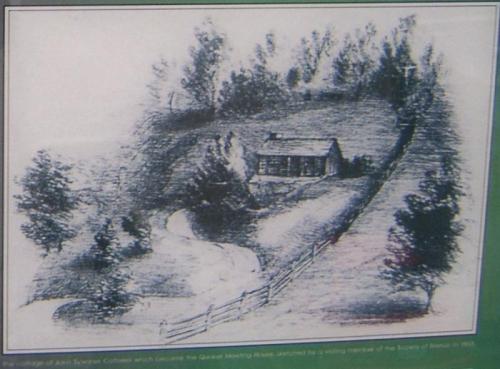
Image of the first Quaker Meeting House in Aotearoa New Zealand. You can read more about Quaker history in Nelson here.
Growing communities and social action (late 1800s–early 1900s)
By the late 19th century, Quaker communities became more organised.
Key developments included:
Regular Meetings for Worship in several regions
Visits from travelling Quaker ministers, including women
Growing involvement in education and social reform
One notable example was the Quaker school in Whanganui, which operated from 1920 to 1969. The school reflected Quaker values of simplicity, cooperation, and respect for each child. Disestablished in 1969, this now serves as The Settlement, a residential community established on Quaker principles, and an education centre.
Over the 20th century, Quakerism took root and permanent Meeting Houses were established in Auckland, Palmerston North, Whanganui, Wellington, Nelson, Christchurch (destroyed in the 2011 earthquake), and Dunedin.
Quakers were also active in:
Prison visiting
Support for people affected by poverty
Promoting peace during times of war
Women in Quaker history
From the beginning, Quakers believed women could speak, lead, and travel as ministers — unusual views for their time.
Women played a major role in New Zealand Quaker life, including:
Establishing meetings
Travelling long distances to support isolated Friends
Speaking publicly on peace, justice, and faith
Their contributions were central, not secondary, to the growth of Quakerism in Aotearoa.
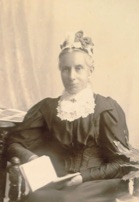
Among the most influential in establishing Quakers in New Zealand was Ann Fletcher Jackson (1833 – 1903). Born into a devout Quaker family in Lancashire, England, she moved to New Zealand in 1879 with her husband Thomas and 11 children. They settled outside Whangarei in Northland where they held regular Quaker Meetings for Worship at their home, inviting neighbours to join them. Ann became a speaker at many local church meetings and by 1885 her work to create a Quaker network had reached a rapidly growing Auckland. Working with local Friends, she worked tirelessly to establish a Meeting for Worship in Auckland and by the end of the year this was achieved. Meetings for Worship were held regularly on Sundays, with a Meeting for Business held quarterly.
From 1886, Ann Fletcher Jackson traveled widely in New Zealand. She was usually accompanied by her husband or one of her sons as she undertook journeys by whatever means possible – on foot, by cart or by coastal steamer. By the time of her death in 1903, through her efforts and supported by funding from English Quakers, a network of Friends had been established from Dunedin in the south to the far north.
Quakers and peace
Quakers are well known for their peace testimony — the belief that violence is incompatible with faith.
In New Zealand this has meant:
Conscientious objection to military service
Support for people imprisoned for refusing to fight
Public witness against war and nuclear weapons
Long-term peace education and dialogue
This commitment continues today through organisations and partnerships both locally and internationally.
Quakers today in Aotearoa New Zealand
Today there are around 30 Quaker Meetings across Aotearoa, from Northland to Southland.
Modern Quakers continue to work on issues such as:
Peace and non-violence
Climate justice
Prison reform
Te Tiriti o Waitangi and right relationships
Supporting refugees and marginalised communities
While numbers are small, Quakers remain active and connected — locally and worldwide.
Why Quaker history matters
Quaker history in Aotearoa is not just about the past. It is about:
How values are lived out over generations
How faith can shape action without seeking attention
How small communities can contribute to wider social change
Understanding this history helps explain who Quakers are today — and why quiet commitment can still make a difference.
Learn more
If you’re curious to explore further:
Explore Snapshots of Quaker History
What exactly is a Quaker Meeting for Worship
Visit a Meeting for Worship (everyone is welcome)
Explore personal stories, read "Why I am a Quaker" stories
Read more about Quaker beliefs and values they aim to live by
Learn about current Quaker work in New Zealand
First time here? You might like to visit the About Us page to learn more
The Nelson Quaker Embroideries
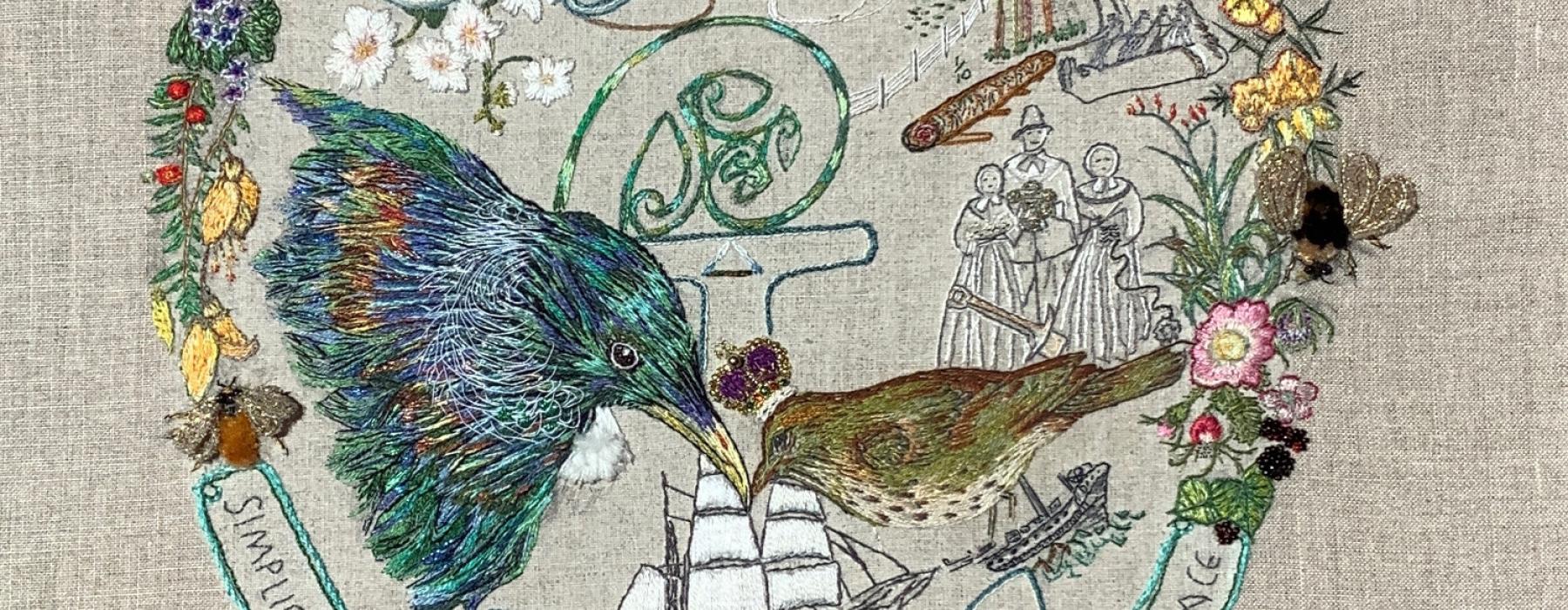
This is a detail from the third embroidery roundel:
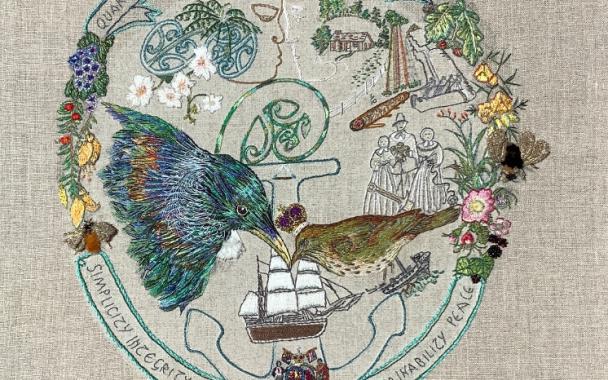
This roundel, the third in a series of three, tells the story of Quakers arriving in Nelson during the European settlement of the 1840s and their interactions with Māori. The design contrasts indigenous and introduced elements, reflecting both cultures.
Quaker values are suggested in the depiction of the Māori greeting, or hongi, echoed in the meeting of the finely-worked thrush and tūī. Tensions of the time are represented by the surveying instrument, referencing Quaker surveyor John Cotterell, who was killed in the Wairau conflict of 1843.
Several Quakers, including Cotterell, worked for the New Zealand Company, which placed them in difficult positions due to dishonest land practices. Cotterell’s house in Nelson, also depicted in the roundel, later became New Zealand’s first Quaker meeting house when it was purchased by English Friends in 1853.
You can see the Embroideries here
Maintained by
Yearly Meeting Outreach Committee