
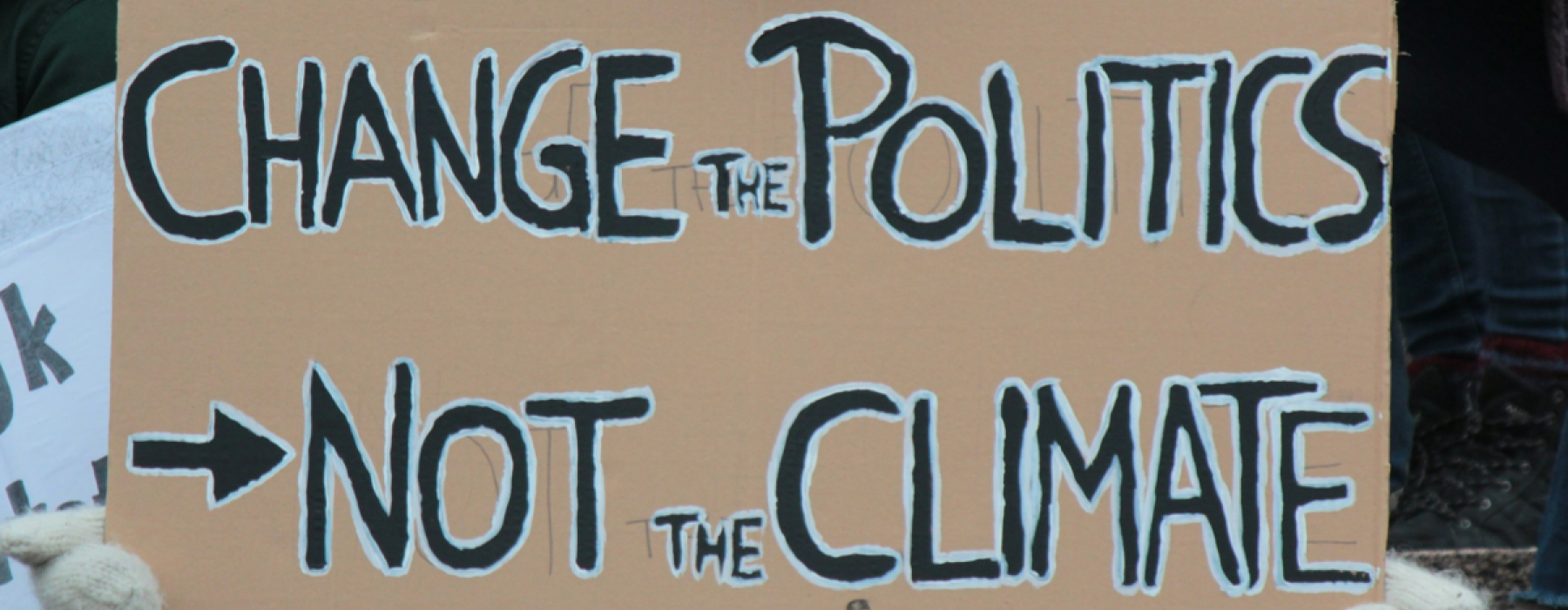
PLEASE CARE FOR OUR COMMON HOME
Open Letter to all 2026 Political Leaders, Candidates and Officers of Parliament
From Aotearoa New Zealand Faith Communities - prepared by the Aotearoa NZ Religious Diversity Centre
This letter asks political candidates of all parties and convictions to consider and address what is happening to our land and people. It particularly focuses on climate change.
WHY IS CLIMATE ACTION NEEDED?
Warming of the Earth's atmosphere and oceans has occurred since around 1900, leading to rapidly changing climate globally. These changes are unmatched since the beginning of human civilisation and pose grave risks to human flourishing and survival [1]. Climate change cannot be disregarded, globally or in Aotearoa New Zealand (NZ).
NZ's recent National Climate Change Risk Assessment states: "Climate change is increasingly affecting the core systems in Aotearoa NZ: the essentials that keep daily life running; the wellbeing of communities; the natural environment that nurtures life and livelihoods; and the way the country plans, decides and acts together." Very many New Zealanders have directly experienced storm and erosion impacts connected to climate change in the last decade. The key infrastructure risks are to water, buildings, road and rail (mostly from flooding and fire). There are also high risks to ecosystems, biodiversity, forestry, personal, social and community wellbeing, and our capacity for emergency management [2]. Adverse weather events increase our insurance premiums, recovery and other costs, and our capacity to manage emergencies [3]. Other significant impacts include heatstroke, especially for outdoor workers, the elderly and infants; spread of tropical diseases; homelessness; and food and energy security. We are particularly concerned about mental health issues such as depression and a sense of hopelessness among children and youth [4].
Climate science is unequivocal that warming of the atmosphere and oceans, leading to adverse climate change, is a result of human activity, particularly burning of fossil fuels (coal, oil and gas) [5] which produce greenhouse gases (GHGs) [6]. Globally, we will soon overshoot the 1.5 degrees temperature guardrail [7], so we need to achieve net zero GHG emissions as soon as possible; and then in order to cool the atmosphere and limit the duration of any temperature overshoot, we will need to achieve net negative GHG emissions for many decades, for the sake of future generations [8].
NZ's per capita GHG emissions are amongst the highest of all OECD countries, even though our total GHG emissions are relatively low because of our small population [9]. While many individuals, councils, and institutions have made meaningful progress in reducing GHG emissions and adapting to the impacts of climate change, collectively these efforts have fallen well short of what is required [10].
Strong national leadership on climate change is urgently needed. This action includes both mitigation (stopping and reversing global warming by reducing global GHGs) and adaptation (policies and actions that reduce vulnerability from expected impacts of climate change [11]). Both national and local Government can help us live up to our reputation of "clean green NZ." A famous Biblical teaching reminds us that "Where there is no vision, the people perish" [12].
NZ recently voted at the United Nations to endorse the 2025 International Court of Justice's unanimous advisory opinion declaring that countries have binding legal obligations to protect the global climate system and prevent environmental harm from GHG emissions [13]. Failure to act is likely to jeopardise our international credibility and our trading relationships [14].
FAITH COMMUNITY AND INDIGENOUS PERSPECTIVES
We recognise and respect the diversity of faiths practiced in our country, and of differing political views held by people of faith. Our faith and spiritual traditions — including those of Māori — teach that the natural world is of sacred importance, that all within it are interconnected, and that it is the duty of all humankind to care for the Earth. In turn, the Earth provides us with everything we need.
Concepts such as "oneness with nature" and "stewardship of the Earth's resources" are expressed in the teachings of all faiths. Many faiths affirm that humans are part of a broader world and urge us to consider the ethical and spiritual dimensions of how humans are meant to relate to each other and the natural world — drawing on culture, family, community, religion, and respect for the common good [15].
Climate action is a critical aspect of partnership under te Tiriti o Waitangi (the Treaty of Waitangi). Māori people and communities are among the most seriously affected by climate-related impacts, while many cultural sites of significance to iwi/Māori sit in places now highly exposed to climate hazards.
OUR RECOMMENDATIONS TO POLITICIANS
We are bound morally, legally and reputationally to play our part in slowing the rate of global climate warming. However, NZ may not be on track to meet its first or second Nationally Determined Contribution (of net GHG emissions reductions) under the Paris Agreement [16], and the government has announced that it will not purchase offshore emissions credits to meet any emissions gap [17]. Hence, we will probably breach our international obligations [18]. Therefore, we call on all candidates and political parties to take a thoughtful and responsible approach to climate change and environmental policies, placing the health of all people, communities, future generations, and Earth itself, at the heart of their governance, policy and planning decisions in this era of increasingly unpredictable and damaging climate events.
We urge you to work with your party and across parties to address legal and international climate action obligations:
- Ensure that our first and second Nationally Determined Contributions to net GHG emissions reduction are fulfilled as a minimum.
- Assist small Pacific Island states, our constitutionally related neighbours, who bear the brunt of a crisis for which they are not responsible [19].
- Accept that NZ, relative to most other countries, should take a higher responsibility for reducing global carbon emissions [20].
In particular, we invite all political parties to improve our people's lives by:
- Maintaining our natural environment in a healthy functioning state. In this way it can not only support all of life and much of our economy, but also naturally absorb atmospheric carbon to the greatest extent possible [21].
- Reducing NZ's dependence on fossil fuels by: (1) discouraging excessive energy consumption at all levels; (2) encouraging energy efficiency; and (3) incentivising the ongoing transition to renewable energy, especially in solar and wind energy and in private and public transport [22].
- Reducing methane emissions from our agricultural sector. This is critical to more rapid reductions in GHG emissions overall [23].
- Incentivising electrification of transport, homes, and as much industry as possible.
- Promoting key climate-friendly industries such as low emissions tourism, regenerative agriculture and many of our international service industries.
- Ensuring that the NZ Superannuation Fund has minimal exposure to high emissions industries [24].
- Implementing measures that address mental health issues resulting from climate change.
- Ensuring that economic development policies recognise the opportunities presented by the challenges summarised above. "The transition to a low emissions society and adaptation to our changing climate is not just a necessity, it is a vast opportunity for each of us. It is in our own self-interest to embrace the change" [25].
- Ensuring that the costs of NZ's ongoing transition towards a fossil-fuel free future are borne fairly and equitably now and not just left to future generations.
- Providing adequate funding for local research and development, also public education on climate change.
We also invite all political parties to:
- Develop a comprehensive, equitable and cost-effective national climate adaptation plan [26].
- Develop policies to ensure that the costs and negative impacts of adaptation including potential relocation of communities are distributed fairly.
- Fund and support national resilience programmes in addition to cleaning up after individual climate and flooding disasters.
The above suggestions have many benefits additional to their impacts on climate. Good mitigation actions will: help reduce our dependence on imported fuels; save on foreign exchange; achieve cleaner air and water and more liveable cities; and support individual and population health. Fair and cost-effective adaptation policies will reduce negative impacts and long-term economic, societal and ecological costs of climate change. In particular they will enhance the resilience of many types of infrastructure; help us face threats to health including the prevalence, spread, and severity of many diseases, and mental health challenges including anxiety; and improve food and water security as the world warms.
In conclusion, we remember that NZ has led the world before — think women getting the vote; brokering international responsibilities; nuclear-free policies — and we can do it again. Let's work together on this wicked problem.
Thank you for reading this and carefully considering our suggestions.
Jenny te Paa Daniel PhD, RDC Co-Chair
Anthony Green, RDC Co-Chair
Richard J. Milne PhD, RDC Climate Action Group lead author
Paul Blaschke PhD, RDC Climate Action Group convenor and co-author
ENDNOTES
- IPCC Sixth Assessment Report cycle — ipcc.ch/report/sixth-assessment-report-cycle/
- 2026 National Climate Change Risk Assessment — climatecommission.govt.nz; National Risk Assessment — police.govt.nz; ScienceDirect — sciencedirect.com/science/article/pii/S2542519621002783; IPCC AR6 — ipcc.ch/assessment-report/ar6/
- Adverse weather events and rising costs — see Climate Commission and insurance sector reporting.
- Mental health impacts on children and youth from climate change — see National Climate Change Risk Assessment.
- Greenhouse gases are gases such as CO2, methane and nitrous oxide that trap heat in the atmosphere.
- Temperatures are measured against the global average from the pre-industrial era, 1850–1900.
- Climate overshoot: global average temperatures temporarily exceed the 1.5°C Paris Agreement threshold — overshootcommission.org/overshoot
- Net negative emissions needed to limit overshoot duration — see Overshoot Commission.
- Per-capita greenhouse gas emissions by country — worldometers.info/greenhouse-gas-emissions/greenhouse-gas-emissions-per-capita/
- Climate Commission — climatecommission.govt.nz; Climate Action Tracker — climateactiontracker.org/countries/new-zealand/
- Adaptation needs in NZ: floods, droughts, sea-level rise, biodiversity and biosecurity change, loss of homes, food and water insecurity — environment.govt.nz
- Proverbs 29:18, Hebrew Bible and Christian Old Testament.
- UN General Assembly endorsement of the 2025 ICJ Advisory Opinion on climate change, 20 May 2026 — mfat.govt.nz
- Livestock emissions targets and NZ's trade reputation — theconversation.com
- Milne, R.J. et al. (2025). "E tū te mana o te Ao — building a climate of hope: faith and action guide." Religious Diversity Centre Aotearoa NZ. ISBN 978-0-473-75801-1 — rdc.org.nz/rdc-climate-action-group/
- Nationally Determined Contributions: NZ's first NDC targets a 50% reduction below 2005 levels by 2030; the second targets 51–55% by 2035 — environment.govt.nz
- Budget 2026 and Paris Agreement funding — rnz.co.nz/news/environment_climate/596633
- Parliamentary Commissioner for the Environment, submissions on ERP2 2026–30 — pce.parliament.nz
- Pacific vulnerability to climate change — beehive.govt.nz; NZ support for the region — mfat.govt.nz/en/environment/climate-change/supporting-our-region
- Climate Action Tracker — climateactiontracker.org/countries/new-zealand/; World Resources Institute NDC tracker — wri.org/ndcs
- Natural environments buffer climate impacts by absorbing greenhouse gases and floodwaters, and supporting GDP, agriculture, tourism and export income.
- Energy in New Zealand 2025 — mbie.govt.nz; transport energy use — times.bec.org.nz
- Methane and NZ's near-term warming, largely from cattle and sheep farming — stats.govt.nz/indicators/new-zealands-greenhouse-gas-emissions/
- Howell, R. (2017). "Investing in People and The Planet." ISBN 978-0-473-38418-0
- Climate Commission — climatecommission.govt.nz/news/the
- Independent climate adaptation report — environment.govt.nz/news/independent-climate-adaptation-report-released/