
Loxley Report Recipients
Photo by Clay Banks on Unsplash

Photo by Clay Banks on Unsplash
Below is a list of the recipients of Loxley Awards since they began in 2008, including summaries of projects and in some cases the reports provided. We have been privileged to fund some amazing people and projects.
Is it time for a Climate Justice Union for Aotearoa? Across 2024, Frances Mountier held 50 kōrero with unionists, climate justice activists, community organisers, and researchers, asking is it time for a Climate Justice Union for Aotearoa? Yes, there is a need for a Climate Justice Union for Aotearoa; not a trade union but a union in both form and method. A membership-based, mass, democratic, participatory organisation. That fights for tangible wins, with the fights undertaken by those who need the wins, and in doing so, pulls more people in. It builds the organisation - builds power - through those wins. That is situated here in Aotearoa, that stands in solidarity with tino rangatiratanga and stands for peace and justice, with a clear set of political pou.

Read Alex's report Summary of National Gathering YouTube Clip
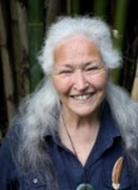
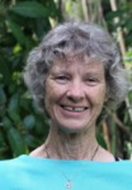
Restorative Justice Processes in various cultures to decide whether some could be used to change on-line aggression
 |  |
The first 2021 Loxley Award was given to Elaine Dyer and Andrea O'Hagen for their project Jade Speaks Up (JSU), a teacher-led programme. JSU gives children in Years 5 to 8 practical relational strategies to practice emotional literacy and self-agency tools. The Loxley Award allowed the developers of Jade Speaks Up to develop a new resource called YG? YG! (You good? You good!) to help students to be more calm and resilient in the face of the COVID 19 lockdown stressors both at home and in school.
Read Elaine and Andrea's Report
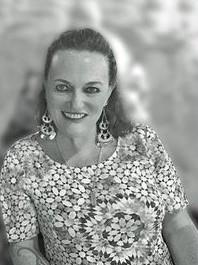
We awarded two Loxleys in 2021. The second Loxley was given to Wiki Walker to support her proposal hold a two day gathering of Maori women involved in social well-being and the care of the environment. Two esteemed ruahine morehu (female elders) were invited to make it possible to draw on the collective wisdom of Maori women in regard to the climate and humanity. From this gathering Wiki was planning to create a research project exploring how Maori mothers and grandmothers can contribute to solutions drawn on their experience. Wiki is a fluent Te Reo speaker, with long experience in environmental and conservation work.
 |  |
The 2019 Loxley award was granted to Anya Bukholt-Payne and James Young-Drew for further development of their Climate Challenge project which teaches secondary school students about climate change issues and the actions they can take regarding these issues.

In 2018 the Loxley was awarded to Lucy Stewart to enable the Disarmament and Security Centre to shift from Christchurch to Waiheke. The award supported the DSC transition, helping the organisation to continue into the next stage of its life, under new personnel and with new systems. Lucy also organized archival material for DSC and upgraded the website.

The 2017 Loxley award was awarded to Lyndon Burford for his project on creating a short course on disarmament for a New Zealand summer school academic setting. He wished to use the funds to consult widely with national and international experts on disarmament and nonproliferation education and to seek advice from national and international experts on the most appropriate design for a course on disarmament education.

In a break with precedence, we awarded two Loxley awards in 2017, due to the high quality of the applications. The second Loxley was awarded to Tracey Barnett for three projects related to refugees; touring the “Transplanted” exhibition project; visiting refugee camps in Greece and Lebanon and using discussions with refugees there to inform her “Expressing refugee voices” project; and continuing her advocacy for refugees in New Zealand.

In 2016 we awarded the Loxley to Murdoch Stephens to support his work with the “Doing Our Bit” campaign to double New Zealand's refugee quota. This campaign was ultimately successful, leading the Labour Government to raise the refugee quota from 750 to 1500 in 2018.

Dr Cowley-Malcolm's doctoral research was an in-depth exploration of Samoan parents' perceptions of, and responses to, aggressive behaviour in young children and the usefulness of an intervention tool named Play Nicely. The Loxley award funds were used to allow the tool to be adapted as an animated game (the play nicely app).

Paul Young, a writer, researcher and activist with Generation Zero was the Loxley award winner for 2014.

Thomas is a social justice researcher specialising in news media and global crises communication. His 2013 Loxley project examined news coverage of the global HIV/AIDS medicines access crisis, in particular looking at how transnational civil society organisations helped to define and publicise the impact of patent protection on global medicines access. Thomas has researched this issue for several years as part of a PhD thesis. His Loxley project was to update the research to the present day, using new interviews with transnational civil society medicines access campaigners to better identify effective strategies for communicating social justice concerns in the mainstream news media.

The Loxley Award for 2012 was given to Jen Margaret from Wellington. She used the funding to research and publish an e-book documenting stories of non-indigenous people working as allies in support of the justice struggles of indigenous peoples in Aotearoa and Australia. While people have been undertaking this work for many years there was little documentation of approaches and few written resources to support people who work as allies. In 2010 Jen was awarded a Churchill Fellowship and the Loxley funds will allow her to consider the concepts she explored in North America in relation to allies in Australia and Aotearoa/NZ.

The Loxley award winner for 2011 was Tanya Newman. At the time of the award she was the Education Coordinator for Kotare Trust Research and Education for Social Change in Aotearoa New Zealand. Kotare is a sister organisation of The Change Agency. Her role at Kotare included organising, designing and facilitating workshops to help strengthen the work of people who are working for social, environmental and treaty justice. Tanya's background was in working for feminist empowerment based organisations such as women's refuge and rape crisis. Tanya was passionate about social movement education and her project was to travel to the USA to learn from George Lakey about how to do transformational processes with groups and to share her learnings on her return to New Zealand.

The 2010 Loxley Award for peace projects was granted to Anna Parker.
Anna's project was to do original research on the Treaty of Waitangi today, seeking to “explore the influence of Te Tiriti on peace-building and relationship-building within organisations.” Central to the project was a series of interviews with key informants about how various understandings of Te Tiriti are informing individual practice and group process and assisting in cooperative relationships.

The Loxley award winner for 2009 was Alyn Ware, an accomplished peace activist on the international stage. Alyn's project was to do research in Costa Rica and the USA on the abolition of nuclear weapons, and the alternatives to war. Alyn is a member of the Public Advisory Committee on Disarmament and Arms Control, which was established under New Zealand nuclear-free legislation.

Ruth Greenaway of Auckland was the recipient of the Loxley Award for 2008. Ruth undertook an oral history project interviewing women in New Zealand from Middle Eastern countries, and women from New Zealand who have lived in Middle Eastern countries. The project was aimed at offering a deeper understanding to New Zealanders about life in that region. Ruth intended that the information collected would form the basis of stories for a series of radio programmes, as well as being available for other researchers.